





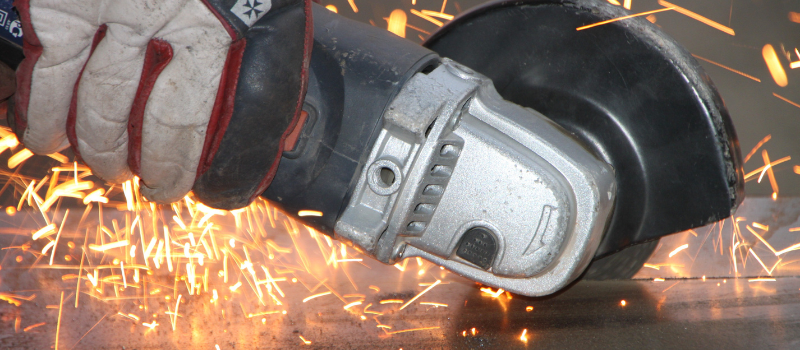
One of the most versatile and indispensable tools for a wide range of tasks, from DIY projects to professional work in construction, is the angle grinder. This rotary electric tool uses abrasive discs to cut, grind, polish, and sharpen a wide variety of materials, including stone, metal, wood, and plastic.
It is its power and versatility that make it an essential tool for both hobbyists and professionals, allowing tasks to be performed with precision and efficiency. From the precise cutting of metal tubes to the fine polishing of a wooden surface, the angle grinder is the ideal solution for a broad range of applications. However, due to the wide variety of models available on the market, choosing the right tool can be a bit challenging. Opting for a grinder that does not fit your needs can be not only unprofitable but can also cause accidents.
Therefore, in this guide we will help you navigate this labyrinth of options so you can choose the angle grinder you really need, based on your specific needs.
Types of Grinders on the Market: Buyer's Guide
As mentioned, a wide variety of ergonomically designed grinders are available in the market at a click, each designed for specific tasks. Understanding the differences between the different types of devices is essential so you can find the right tool.
Angular Grinders or Disc Grinders
The angular grinder, known as the disc grinder or angle grinder, is the most common and versatile model. Its distinctive design, with a powerful motor and an abrasive disc on the axis perpendicular to the handle, makes it essential for carrying out a wide range of tasks.
This model features a compact and robust design, with a powerful electric motor that can vary between 700 and 2700 W, depending on the model. The rotational speed is usually adjustable so you can set it according to the material and the task at hand. The abrasive disc, of different diameters, ranges from 115 mm, 125 mm to 230 mm, and is easily changed to adapt to each task. It is worth noting that many of these devices include a spindle lock system to facilitate disc changes and other safety features.
- Uses: They are ideal for cutting and grinding, polishing and brushing metals, stones, ceramics, and other hard materials, or even for sanding. They are commonly used in construction, the metallurgical industry, automotive, and DIY.
- Advantages: They are powerful, versatile, and relatively easy to use. Their compact design facilitates access to hard-to-reach areas. There is a wide variety of abrasive discs available, which broadens their possibilities.
- Disadvantages: They can generate significant vibrations during use, which can cause user fatigue. They require caution and the use of PPE, such as safety glasses, gloves, and hearing protection, due to the risk of material splashes and high noise. Changing the disc requires attention to avoid accidents.
Die Grinder or Straight Grinder
On the other hand, we also have the straight grinder, or die grinder, which is characterized by a design with a long, slender shaft on which the cutting tool is mounted. It is usually recommended for precision work in tight spaces.
This type of tool has a motor typically less powerful than that of angular grinders, but its design allows for greater precision and control. The cutting tool can be easily changed, ensuring a wide variety of options for different materials and tasks. Additionally, they often feature a variable speed control system.
- Uses: They are used for grinding, polishing, deburring, and precision sharpening in hard-to-reach areas. They are common in mechanical, jewelry, automotive, and industrial maintenance tasks.
- Advantages: They allow for great control and precision in work, ideal for details and fine tasks. They are lighter and more manageable than angular grinders, reducing fatigue. The variety of accessories available broadens their versatility.
- Disadvantages: Typically have less power than angular grinders, making them less suitable for heavy-duty work. The slender shaft can be more prone to bending or breaking if not used properly.
Bench Grinder
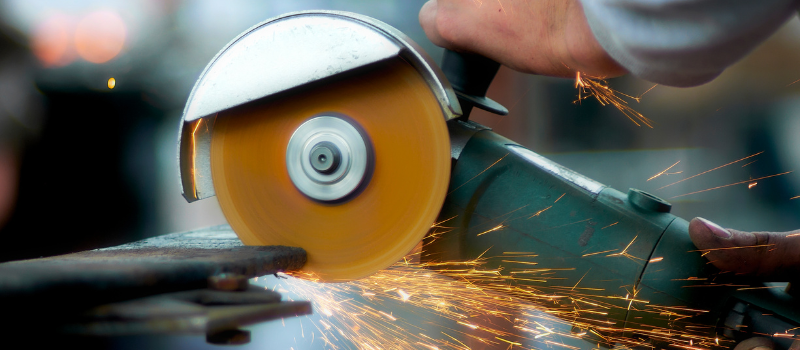
A stationary tool used for high-precision grinding and sharpening is the bench grinder. Its robust and stable design makes it perfect for demanding and continuous work.
This type of device consists of a powerful motor that drives one or two mounted abrasive discs on a horizontal shaft. Typically, it includes a protective system to prevent accidents and a water-based cooling system to protect the discs' lifespan.
- Uses: Used in professional workshops to sharpen tools, grind metals, and perform precise finishing tasks. They are ideal for mass production work or tasks that require high precision and repeatability.
- Advantages: They are robust, precise, and stable, making them perfect for continuous and demanding work. They offer great control and precision in the work. Their design allows working with both hands, improving safety and control.
- Disadvantages: They are stationary tools, which limits their mobility. They require a dedicated workspace. They tend to be more expensive than mini portable grinders.
Other Types of Grinders
It is worth noting that there are also other more specialized grinders on the market, such as pedestal grinders for large-scale work, pneumatic grinders powered by compressed air, and belt grinders for polishing and finishing surfaces.
Features to Consider When Buying a Grinder
Now that you know the different types of grinders available on the market, we want to emphasize that choosing the right device will depend on a careful evaluation of certain technical and design characteristics.
Remember that, to make a quality investment that fits your needs and budget, you should evaluate these key factors that will guarantee optimal performance and greater durability.
Power (kW/HP) and Its Relation to the Type of Work
The power of a grinder, measured in kilowatts or horsepower, is a crucial factor that influences the ability to perform different tasks. Greater power means greater cutting, grinding, and polishing capacity, especially in hard and dense materials.
For light tasks, such as polishing surfaces and sharpening tools, a low power between 700 and 1000 W grinder is more than enough. However, for heavier tasks, such as cutting thick metals or removing large amounts of material, a higher power is recommended, between 1500 and 2700 W.
Before making the purchase, you will need to consider the type of material you typically work with and the type of cut required to determine the optimal power. Do not forget that the more power the device has, the heavier and less comfortable it will be to use.
Rotation Speed (RPM) and Its Impact on Performance in the Best Grinders
Rotation speed (RPM or revolutions per minute) directly influences cutting efficiency and surface finish. This means that a higher rotation speed enables faster and more aggressive cutting, ideal for hard materials and grinding work. However, excessive speed can cause greater heating and damage both the tool and the material.
Lower speeds of the mini grinder are ideal for precision work and polishing, where fine process control is required. For this reason, many grinders offer variable speed control, which allows you to adjust the RPM according to the material and task, ensuring optimal results in different situations.
Disc Diameter and Compatibility with Different Accessories
The diameter of the abrasive disc determines cutting capacity and working area. Larger diameter discs allow faster and deeper cuts, while smaller discs are suitable for working in confined spaces or on smaller workpieces.
Be sure to select a grinder compatible with the disc diameter you need for your routine tasks. In addition to diameter, you should assess compatibility with different types of discs and accessories, such as cutting discs, grinding discs, polishing discs, and metal brushes, among others. In the market, some grinders are compatible with a wide range of accessories, increasing their versatility, while others are more limited.
Safety System (Safety Switch, Overload Protection)
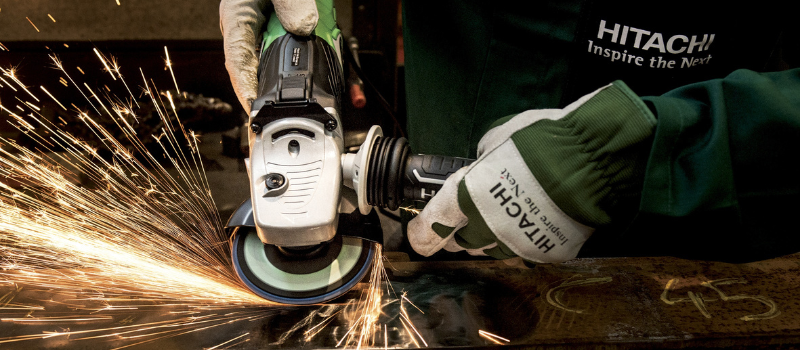
Safety is a primordial factor when working with a grinder. It is recommended to choose a model that includes a robust safety system, such as a safety switch that prevents accidental starts and an overload protection system that automatically disconnects the tool in case of overheating or overexertion.
Also remember to verify the presence of a robust disc guard to prevent sparks and fragments of material from being ejected during operation. Implementing these safety features not only protects the user but also prolongs the tool's lifespan.
Ergonomics and Comfort of Use (Weight, Grip, Vibrations)
Weight, grip, and vibration are also factors that directly influence comfort and operator fatigue. Indeed, a light and well-balanced grinder reduces fatigue during work, especially during prolonged tasks.
Similarly, an ergonomic and non-slip handle provides a secure and comfortable grip, which is crucial for maintaining control. Excessive vibrations can cause discomfort and long-term damage to the hands, so it is always advisable to choose a grinder that features a vibration reduction system.
Durability and Construction Materials
The durability of a grinder largely depends on the quality of the materials used in its construction. If you want the best long-term results, look for grinders built with sturdy and durable materials, such as metal housings that are impact resistant and high-quality internal components. This not only ensures the tool's longevity but also improves overall performance.
Brand and Reputation
Finally, we want to emphasize that the brand also plays a fundamental role when choosing a product of quality and durability that offers the best results.
Among the most recognized brands on the market, we find:
- Makita: A Japanese brand renowned for its high quality and durability in power tools. They typically offer high-end grinders, usually at a higher price than other brands, which represents a safe long-term investment, especially for professionals seeking performance.
- : A German brand that offers a wide range of power tools at more affordable prices compared to Makita or Bosch. Their grinders sit in a segment more focused on hobbyists and home users, offering good value for occasional work or DIY projects.
- Bosch: Another German brand with a long track record known for reliability and quality. They offer from basic models to high-performance professional tools, with a value-for-money that sits between Makita and Einhell.
- AEG: Another German brand with a long history in manufacturing power tools. They offer grinders that position in a similar range to Bosch in terms of value for money, though their tools tend to be robust and with performance comparable to Makita.
Conclusion
In short, choosing the grinder that best suits you will largely depend on your needs and the features you look for in the product. In the market you will find versatile angle grinders, precise straight grinders, and sturdy bench grinders, each with its own advantages and disadvantages that should be considered based on your needs and personal budget.
Also, to make the right decision, don't forget to analyze factors such as power, rotation speed, disc diameter, the safety system, ergonomics, and durability. This will help you make an informed choice and invest in a quality grinder that not only drives your project but also guarantees optimal performance and the greatest long-term durability, ensuring efficiency and safety in your work.
Additionally, keep in mind that choosing the right grinder not only affects the quality of your work but also has a significant impact on your comfort and safety during projects. A good investment in a quality grinder can make the difference between a job well done and one filled with frustrations or inconveniences.