






Keeping foods fresh for longer not only depends on their quality, but also on the appliance in which they are stored. A poor choice can translate into higher electricity consumption, wasted space, or, worse, constant refrigeration problems. With so many options on the market, from basic models to smart refrigerators with advanced features, finding the right one can seem overwhelming
Before investing in a new fridge, it is essential to know the key factors that influence its performance and durability. Capacity, the type of cooling system, energy consumption, and additional features play a decisive role in the user experience. Moreover, needs vary according to the available space, the number of people in the home, and each family's shopping habits.
In this guide, we will analyze in detail the aspects that should be considered to make an informed decision. We will also compare the different types of refrigerators, explain which technologies can make a difference, and answer the most frequently asked questions about their maintenance and operation. With this information, the choice will be much easier and tailored to each need, thus avoiding common mistakes that can be costly in the long term.
Types of refrigerators: Pros and cons of existing fridges
There are multiple types of refrigerators on the market, each with features designed for different needs and spaces. From compact models to high-capacity refrigerators with advanced technology, the choice will depend on factors such as family size, how often you shop for groceries, and the layout of the kitchen. Below are the main types of refrigerators, with their advantages and disadvantages.
One-door refrigerators
These models have a single compartment that combines the refrigerator and, in some cases, a small freezer inside. They are a practical option for those seeking a simple solution without needing large spaces.
Pros:
- Compact size, ideal for small kitchens or second homes.
- Lower energy consumption compared to larger models.
- Affordable price.
Cons:
- Reduced capacity, little space for frozen foods.
- Since they lack No Frost, they can develop frost.
Two-door fridge (combi)
They have a refrigerator on the top and a freezer on the bottom or vice versa. They are among the most common models in homes due to their balance between size and capacity.
Pros:
- More storage space compared to one-door fridges.
- Efficient organization, with separate zones for refrigeration and freezing.
- Available in a wide variety of sizes and technologies.
Cons:
- Tend to take up more space in the kitchen.
- Models without No Frost technology require manual defrosting.
American side-by-side refrigerator
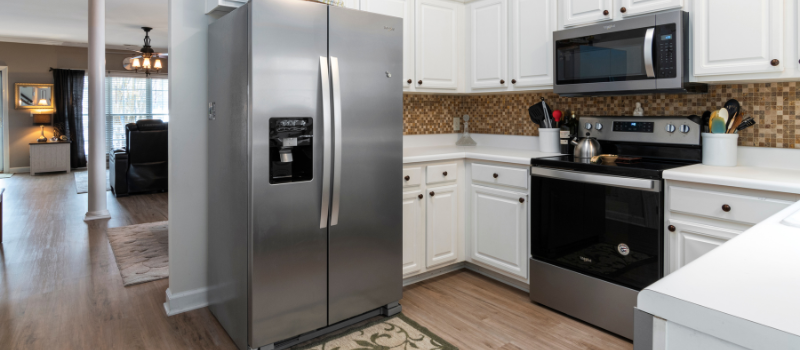
These refrigerators have two vertical doors: one for the refrigerator and one for the freezer. They are an excellent option for large families or for those who require ample storage.
Pros:
- Large capacity, ideal for storing large amounts of food.
- Often include water and ice dispensers.
- Modern and sleek design.
Cons:
- Higher energy consumption.
- Require quite a bit of space in the kitchen.
Refrigerators with bottom or top freezer
Some combo models place the freezer on the top, while others place it on the bottom. The choice depends on how often each compartment is used.
Pros:
- Allow prioritizing access to the most-used area.
- Ergonomic design according to each user's needs.
Cons:
- Models with the top freezer can be less convenient for accessing fresh products.
- Not all include No Frost technology.
Small fridges or minibars
Ideal for offices, hotel rooms, or compact spaces, these models offer basic cooling in compact dimensions.
Pros:
- Small size, easy to place in any space.
- Low electricity consumption.
Cons:
- Limited capacity, not suitable for long-term storage.
- Do not include a freezer or have a very small one.
Each type of refrigerator has advantages and disadvantages that should be evaluated based on usage and available space. Knowing these characteristics will make it easier to find the model that best fits each need.
Key factors to consider before buying a refrigerator: buying guide
Ensuring proper food preservation, optimizing kitchen space, and reducing energy consumption are fundamental aspects when evaluating options for a new appliance. With a wide variety of models available, knowing the key factors can make the difference between a successful purchase and one that causes issues in the long term when buying a refrigerator. Beyond design or brand, elements such as capacity, energy efficiency, and advanced features influence the user experience and the appliance's performance.
Some cooling models are designed for large families, while others are ideal for small homes or compact spaces. Additionally, new technologies allow maximizing efficiency and improving food preservation, although not all innovative features are truly necessary for all users. Carefully evaluating these aspects will help find the balance between functionality, consumption, and convenience.
Fridge capacity and size: Which is right for your home?
The available space in the kitchen and the number of people who use the fridge determine the ideal capacity. A model that is too small can cause storage problems in the crisper, while one that is excessively large will take up more space than necessary and consume more energy.
How to choose capacity according to the number of people at home
As a reference, you can follow these estimates:
- 1-2 people: refrigerators from 150 to 250 liters.
- 3-4 people: capacity between 250 and 350 liters.
- More than 4 people: models of 400 liters or more.
If you store large quantities of frozen foods, you will need a large freezer or consider a separate refrigerator. It is also important to evaluate the interior space layout, such as the number of adjustable shelves and specific compartments for fruits, vegetables, and fresh products.
Standard measurements and tips to ensure it fits in the available space
The dimensions of a refrigerator vary depending on the model and capacity. Standard measurements usually range between 55 and 70 cm in width, although side-by-side models can exceed 90 cm.
Before making the purchase, it is recommended to:
- Measure the available space, considering height and width.
- Leave at least 5 cm of clearance on the sides and rear for proper ventilation.
- Verify that the doors can open without obstructions, especially in small kitchens.
Energy consumption and efficiency: How to save on the electricity bill?
The electricity cost of a fridge represents a significant percentage of total household consumption, since it runs continuously. Choosing an efficient model helps reduce costs in the long term and minimize environmental impact.
Energy labels and their importance
Energy labels classify appliances on a scale from A (most efficient) to G (least efficient). Choosing a model with a high rating can save up to 40% on electricity consumption compared with older models.
Some features that improve efficiency include:
- Inverter compressor, which adjusts power according to demand and avoids peaks in consumption.
- Doors with good seal, to prevent cold leaks.
- LED lighting, which reduces electricity consumption compared to traditional bulbs.
Technologies that help reduce electricity consumption
Some refrigerators incorporate systems that optimize energy efficiency:
- Eco or Vacation mode: reduces spending when the fridge is used less.
- Ventilated cooling systems: distribute the temperature evenly to better preserve foods without overworking the motor.
- Temperature sensors: automatically adjust power according to environmental conditions.
Although the most efficient models tend to have a higher initial cost, the investment is offset by savings on the electricity bill.
Technology and advanced features
Technological advances have allowed the incorporation of innovative features in modern refrigerators. However, not all are essential for every user, so it is important to analyze which ones provide real benefits.
No Frost vs. static: key differences
One of the most important aspects when choosing a refrigerator is its cooling system:
- No Frost: prevents frost buildup, maintains a uniform temperature, and avoids the need for manual defrosting.
- Static refrigeration: preserves more moisture in foods, but requires manual defrosting from time to time.
For those seeking convenience and easier maintenance, No Frost refrigerators are the best option, although they tend to be more expensive than static ones.
Water and ice dispensers: are they worth it?
Some models include water and ice dispensers integrated into the door, which is convenient in hot climates or for those who want quick access to cold drinks.
Pros:
- Convenience and instant access to cold water and ice.
- Prevents the need to store bottles inside the refrigerator.
Cons:
- Require connection to a water outlet or manual filling of the reservoir.
- May increase energy consumption.
- Take up space on the door, reducing storage capacity.
Connectivity and smart refrigerators
Smart refrigerators allow you to control the temperature from a mobile app, receive alerts if the door is left open, and adjust functions according to usage.
Are they worth it?
- They are useful for those seeking automation and remote control.
- Some include touch screens with recipes and shopping lists.
Disadvantages:
- Higher price compared to traditional models.
- Functions that may not be necessary for all users.
Comparison of the best refrigerators in 2025
When considering the purchase of a new fridge in 2025, it is essential to evaluate models that offer an excellent value for money, incorporating energy efficiency, advanced technology, and functional design. Below are some of the most notable options of the year:
Bosch Series 4 KGN39VWEA
Advantages:
- VitaFresh technology: Keeps fruits and vegetables fresh for longer.
- Super Freeze function: Allows rapid freezing of freshly added foods.
- LED lighting: Provides clear and uniform visibility inside.
- EasyAccess drawers: Facilitate access and organization of foods.
Disadvantages:
- Energy efficiency rating E: Although efficient, there are models with a better energy rating.
- Price: Placed in a mid-to-high range, may not be affordable for all budgets.
Midea Combi Refrigerator
Advantages:
- Compact design: Ideal for kitchens with limited space.
- Adjustable digital thermostat: Allows precise temperature control.
- No Frost technology: Prevents frost formation, reducing maintenance.
- Reversible doors and adjustable shelves: Offer flexibility in organization and placement.
Disadvantages:
- Limited capacity: With 199 liters in the fridge and 71 liters in the freezer, it may be insufficient for large families.
- Energy efficiency rating E: While adequate, there are more efficient options on the market.
CHiQ No Frost Combi Refrigerator
Advantages:
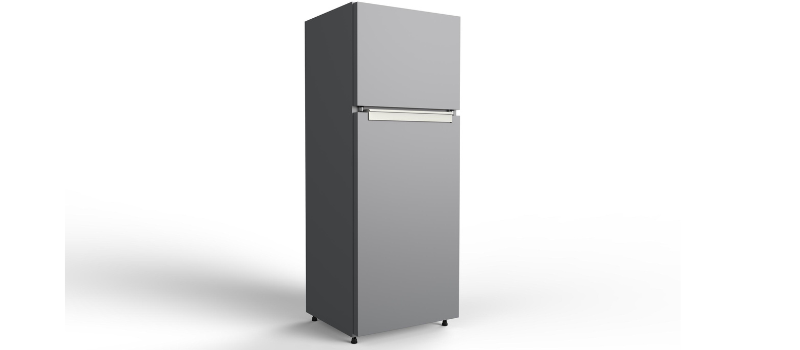
- Large capacity: 351 liters, suitable for large families.
- Inverter compressor: Provides energy efficiency and quiet operation.
- Versatile operating modes: Includes options such as Smart, Vacation, Cooling, and Quick Freezing.
- Modern dark inox design: Adds an elegant touch to the kitchen.
Disadvantages:
- Considerable dimensions: Requires ample space for installation.
- Energy efficiency rating D: Although it has inverter technology, its energy rating could be better.
Cecotec Bolero CoolMarket
Advantages:
- Integrated water dispenser: Adds convenience without having to open the door.
- Total No Frost technology: Maintains uniform temperature and prevents ice buildup.
- Eco and Vacation modes: Optimizes energy consumption according to needs.
- Elegant stainless steel design: Combines aesthetics and functionality.
Disadvantages:
- Energy efficiency rating D: Although it includes an inverter motor, its energy rating could be improved.
- Height of 185 cm: Might be challenging for spaces with height restrictions.
Hisense RT267D4AWF
Advantages:
- Compact two-door design: Ideal for small spaces or as a complement in offices.
- Energy efficiency A+: Offers reduced energy consumption.
- Quiet operation: Suitable for environments where noise is a consideration.
- Affordable price: A good option for tight budgets.
Disadvantages:
- Limited capacity: Not suitable for large families or those needing more storage space.
- Basic features: Lacks advanced technologies found in higher-end models.
When selecting a refrigerator, it is crucial to consider the home's specific needs, available space, and budget. These highlighted models in 2025 offer a variety of features and prices that suit different preferences and requirements.
Conclusion
Making the right decision when choosing a refrigerator involves evaluating multiple factors, from capacity and energy consumption to the advanced features and space distribution. With a wide variety of models on the market, it's essential to analyze which one best fits the home’s needs, considering the number of people, the frequency of grocery shopping, and the space available in the kitchen.
One-door refrigerators are ideal for small spaces or for those seeking an economical and functional option, while combi models offer a balance between refrigeration and freezing. Side-by-side versions stand out for their large capacity, although they require more space and higher energy consumption. It is also important to consider the location of the freezer and No Frost technology, which eases maintenance and prevents frost buildup.
Additionally, energy efficiency plays a key role in reducing electricity costs. Opting for a model with a good energy rating and technologies such as inverter compressors or eco modes can generate significant long-term savings. Likewise, advanced features, such as water and ice dispensers or WiFi connectivity, can be useful for some users, though they are not always essential.