


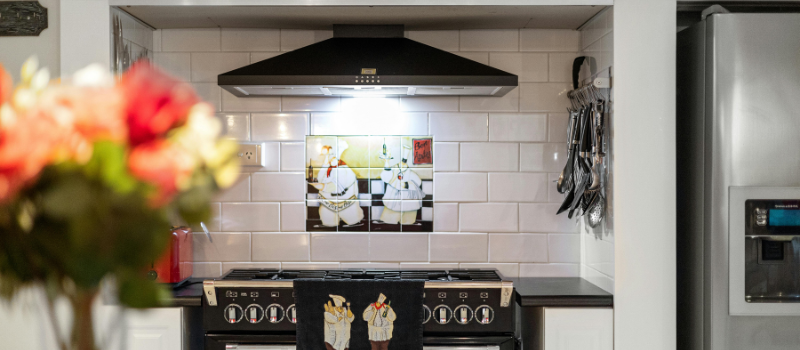
Buying a range hood isn't simply ticking another appliance off the list. It is, in fact, a decision that can make the difference between a functional kitchen and a space filled with smoke, lingering odors, and suspended grease. Many times this device goes unnoticed until the cooking experience starts to become uncomfortable. And that's exactly when you realize that not all hoods fit all spaces... nor all cooking habits.
The current variety is enormous: decorative models, integrated, quiet, powerful, with recirculation or with exterior exhaust. And among so many options, it's easy to be swayed by design or price without evaluating what actually matters: performance, the right size, the type of cooking, and the correct installation.
This article doesn't aim to sell you a brand or convince you to buy the most expensive one. Here you'll find a clear, step-by-step guide, so you can choose wisely, without unnecessary jargon and without future regrets. Because a good choice not only improves the environment, it also protects health, prolongs the life of other appliances, and completely transforms your cooking experience. Ready to make the best decision? Here we go.
Why is it Important to Choose Your Range Hood Well?
It may seem like a minor detail within kitchen equipment, but the truth is that the range hood plays a much more relevant role than many imagine. Choosing the right one not only influences air quality, but also comfort, cleanliness, energy savings, and even the overall design of the space. Therefore taking the time to read a hood buying guide like this, before any hood purchase, is an investment in long-term comfort.
The Role of the Hood in Kitchen Ventilation
The main function of any exhaust hood — whether island, wall-mounted, or integrated — is to remove the smoke, vapors, and odors generated when cooking on the hob. To achieve this, its ventilation system draws in air laden with grease and particles, filters it or expels it to the exterior through an appropriate duct.
From a technical standpoint, a good hood should have enough power to renew the kitchen air between 10 and 12 times per hour. This is key not only to keep the environment clean but also to prevent humidity, mold, and grease from building up on surfaces, walls, and furniture.
Furthermore, in open-plan kitchens that are open to the living room or dining area, its proper operation is essential so that odors do not spread to the rest of the home.
Benefits of a Good Choice
- Less persistent odors:
A hood with the right power effectively eliminates cooking odors, keeping the environment fresh even after preparing strong dishes on the stove, such as frying or roasting.
- Less humidity and grease in the environment:
Proper extraction, whether by recirculation or with exterior air output, noticeably reduces vapor and grease particles that, over time, adhere to furniture, ceilings, and appliances.
- Long-term energy savings:
An efficient model that fits the space consumes less energy and optimizes its performance without needing to run constantly at maximum level.
- Better aesthetics and functionality:
In addition to its technical function, many wall-mounted or decorative hoods can integrate perfectly into the kitchen design, contribute a modern or elegant touch, and offer direct lighting over the cooking area.
Types of Range Hoods: Which One Best Fits Your Kitchen?
Before you rush to buy, it's worth knowing the different types of range hoods that exist and how they fit each type of kitchen. Not all offer the same, neither in power, nor in size, nor in aesthetics. Some are designed for small spaces, others for open or designer kitchens. Below we review the main models, with their advantages, disadvantages, and recommendations according to the kitchen style.
Decorative Hoods
This type of hood has become a very popular option in modern kitchens thanks to its striking and elegant design. They install directly above the cooking area and are usually visible, so their presence adds aesthetic value.
Advantages:
– Varied and attractive designs (stainless steel, glass, matte black, etc.)
– High power, ideal for frequent use
– They usually include good LED lighting
Disadvantages:
– They occupy more visual space
– Installation is more complex and visible
– They can be more expensive
Who is ideal?
Perfect for large, open, or decor-focused kitchens. Highly recommended when you want to combine functionality and style.
Integrated or Built-in Hoods
These hoods are installed inside an upper cabinet, remaining practically hidden from view. They are widely used in kitchens with minimalist design or where you want to maximize space.
Advantages:
– Total discretion: they integrate into the furniture
– Take up little space
– They are usually cheaper than decorative ones
Disadvantages:
– Power somewhat more limited in basic models
– Access more difficult for cleaning or maintenance
Who is ideal?
Ideal for small or minimalist kitchens where a clean aesthetic and space optimization are prioritized.
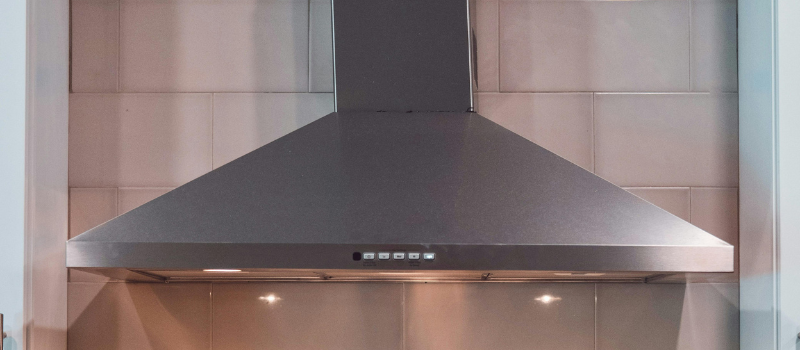
Island Hoods
This model is designed especially for kitchens with a central island, where the cooking area is not against the wall. They are installed suspended from the ceiling and are a very powerful visual element.
Advantages:
– High extraction power
– Striking, modern, and sophisticated designs
– Effective lighting over the island
Disadvantages:
– More complex and costly installation (requires top outlet or more powerful recirculation systems)
– High price
– Require high ceilings and open space
Who is ideal?
Perfect for spacious kitchens with a central island. Recommended if you want an impactful design without sacrificing functionality.
Telescopic or Extraplanar Hoods
These hoods are integrated into the bottom of the upper cabinet and extend outward when used. They are a very practical solution for small or discreet kitchens.
Advantages:
– Very compact and discreet
– Easy to use and hide
– Affordable price in most models
Disadvantages:
– Lower extraction capacity
– Lighting and design less sophisticated
– Not recommended for heavy-use kitchens
Who is ideal?
Perfect for small kitchens, apartments, or homes where cooking is occasional. Also useful in second homes or spaces where functionality is prioritized without highlighting the appliance.
Key Factors Before Buying a Range Hood
Choosing a range hood goes far beyond design or price. There are a series of technical and practical aspects that, if overlooked, can lead to a poor purchase and a bad cooking experience. Analyzing these factors will help you choose a model that truly fits your space, your cooking pace, and your real needs. Below we review the most important elements to consider before making a decision.
Size and Dimensions of the Hood
One of the first things you should consider is size. The hood should be at least as wide as the cooktop. Ideally, it should slightly exceed it to better capture vapors and smoke. The most common measurements are 60, 70, and 90 cm, though there are also larger models for professional kitchens.
If you install a hood that is too small for your hob, you will lose absorption capacity. Conversely, one that is too large can be unnecessary or not very aesthetic if space is tight.
Extraction Power (m³/h)
This is an essential factor. The extraction power is measured in cubic meters per hour (m³/h) and determines the hood's ability to renew the kitchen air. A simple rule is to multiply the square meters of your kitchen by the height and then by 10 or 12, to calculate how many times the air should be renewed per hour.
For example, a kitchen of 12 m² with a height of 2.5 m needs a hood of at least 300 to 400 m³/h. If you cook very frequently, it's advisable to opt for a hood with higher power to ensure good ventilation.
Noise Level (dB)
The sound level is a detail that is often underestimated... until the hood is turned on. It is measured in decibels (dB) and can greatly affect comfort in the kitchen, especially if it's a shared space or integrated with other areas of the house.
Modern hoods usually have a range between 40 and 70 dB. An acceptable level would be up to 60 dB during normal operation. Some brands offer "ultra-quiet" models, which are ideal if you spend a lot of time cooking or if you have an open kitchen.Type of filtration: with exterior exhaust or recirculation
There are two main operating systems: extraction and recirculation.
– Exterior exhaust hoods are more effective, as they expel the air laden with grease and odors directly outside the home.
– Recirculation hoods, on the other hand, filter the air using carbon filters and return it clean to the environment. They are easier to install, but require more frequent maintenance and do not remove humidity.
The choice will depend on the structure of your kitchen. If you have the option of exterior venting, it is always preferable.
Energy Consumption and Efficiency
Like any appliance, the hood also consumes energy. The most modern models include an energy label, and the ideal is to choose those with A rating or higher. This not only reduces electricity consumption but also environmental impact and long-term cost.
Additionally, an efficient hood usually incorporates LED lighting and low-energy motors, without sacrificing power.
🔹 Aesthetics and finishes (stainless steel, glass, colors)
Last but not least, there is the visual aspect. Today hoods not only fulfill a technical function, they also form part of the kitchen design. There are options in stainless steel, black glass, white, matte colors, or even customized tones.
Choose a model that harmonizes with the style of your kitchen, but remember that aesthetics should not come before functionality.
How to Calculate the Ideal Power of Your Hood? The Guide
One of the most common mistakes when choosing a range hood is not paying attention to its power. And it's not just about “the more, the better.” A hood too powerful for a small kitchen can generate more noise than necessary, while a hood with too little extraction capacity in a large space will be ineffective.
Therefore, it's essential to calculate how much power you need according to your kitchen's characteristics. Don't worry; you don't have to be an expert: with a simple formula you can know what level of extraction is appropriate for your space.
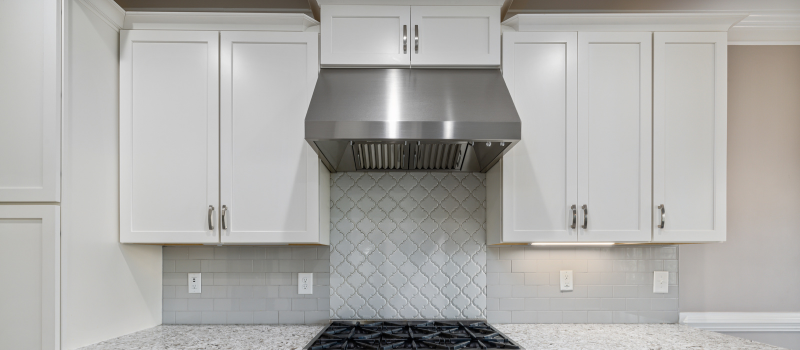
Quick Formula to Calculate It Based on Your Kitchen's m²
The power of a hood is measured in cubic meters per hour (m³/h) and represents the amount of air it can renew in an hour. To know which you need, you just have to apply this formula:
Area (in m²) × Height (in m) × 10
That result will give you the minimum recommended power. For example, if your kitchen measures 12 m² and has a height of 2.5 meters:
12 × 2.5 × 10 = 300 m³/h
In that case, a hood with a power of between 300 and 400 m³/h would be suitable. If you cook very frequently, it is advisable to add a small margin and opt for one a bit more powerful.
Tips for Open or Closed Kitchens
In closed kitchens, the standard calculation is usually sufficient. But if your kitchen is open to the living room or dining area, the hood should compensate for that extra air volume. In these cases, it is advisable to multiply the result by 12 or even by 15, depending on how open the space layout is.
Additionally, in open kitchens it is preferable to choose quieter hoods with better filtration, since odors and noises directly affect the rest of the home.
Conclusion
Choosing the right range hood is not a minor task, and now you know why. Beyond being a simple appliance, it plays a key role in ventilation, comfort, and cleanliness of your kitchen. Analyzing the type of hood that best fits your space, correctly calculating the extraction power, taking into account the noise level or energy efficiency... are essential steps to make a sound purchase.
It's not just about aesthetics or price. A good choice improves air quality, prevents grease buildup, reduces bothersome odors, and can integrate perfectly into your home's design. And while there are many options on the market, spending a few minutes understanding what you truly need will make all the difference.
With this step-by-step guide, you now have the tools to make an informed, practical, and durable decision. So before you let yourself be carried away by the prettiest or the cheapest, remember: the ideal range hood is the one that combines performance, functionality, and style, and truly fits your kitchen and your way of cooking.
Your next hood can become a great ally. You just need to choose wisely.